





UAlbany Researchers Develop New Laser Technique to Test mRNA-Based Therapeutics
By Mike Nolan
ALBANY, N.Y. (Feb. 25, 2026) — Messenger RNA (mRNA) technology is transforming medicine by providing our cells with genetic instructions to produce proteins that help the immune system prevent or fight a wide range of diseases, including cancer and other rare disorders.
Before the molecule can help fight disease, mRNA is packaged into lipid nanoparticles to protect it from rapid degradation. These fatty, protective bubbles act as a delivery vehicle, ensuring the mRNA properly enters the cell to deliver instructions for protein production.
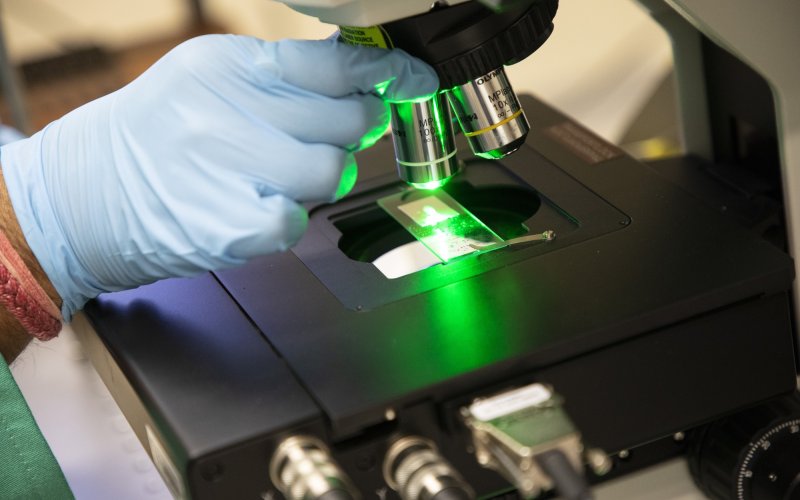
Researchers at the University at Albany are developing a new technique that can determine whether mRNA is being properly encapsulated inside the lipid nanoparticles. Their method relies on Raman spectroscopy, a non-destructive laser technique that analyzes the chemical composition of materials.
In a study recently published in Analytical Chemistry, the research team demonstrated the potential of the technique, which could be used to rapidly evaluate the integrity of mRNA vaccines and therapeutics.
“mRNA therapeutics have emerged as a powerful tool for treating a wide range of diseases, but their clinical success depends on overcoming issues of instability and delivery,” said UAlbany chemist Igor Lednev, who is leading the development of the technique. “Raman spectroscopy offers us unique information that can help to ensure mRNA is fully encapsulated inside lipid nanoparticles, ensuring the safety and effectiveness of these therapeutics.”
A Chemical Fingerprint
Raman spectroscopy works by shining a laser light on a sample and measuring the scattered radiation. No two samples produce the same scattered light, offering a unique measurement, similar to a fingerprint.
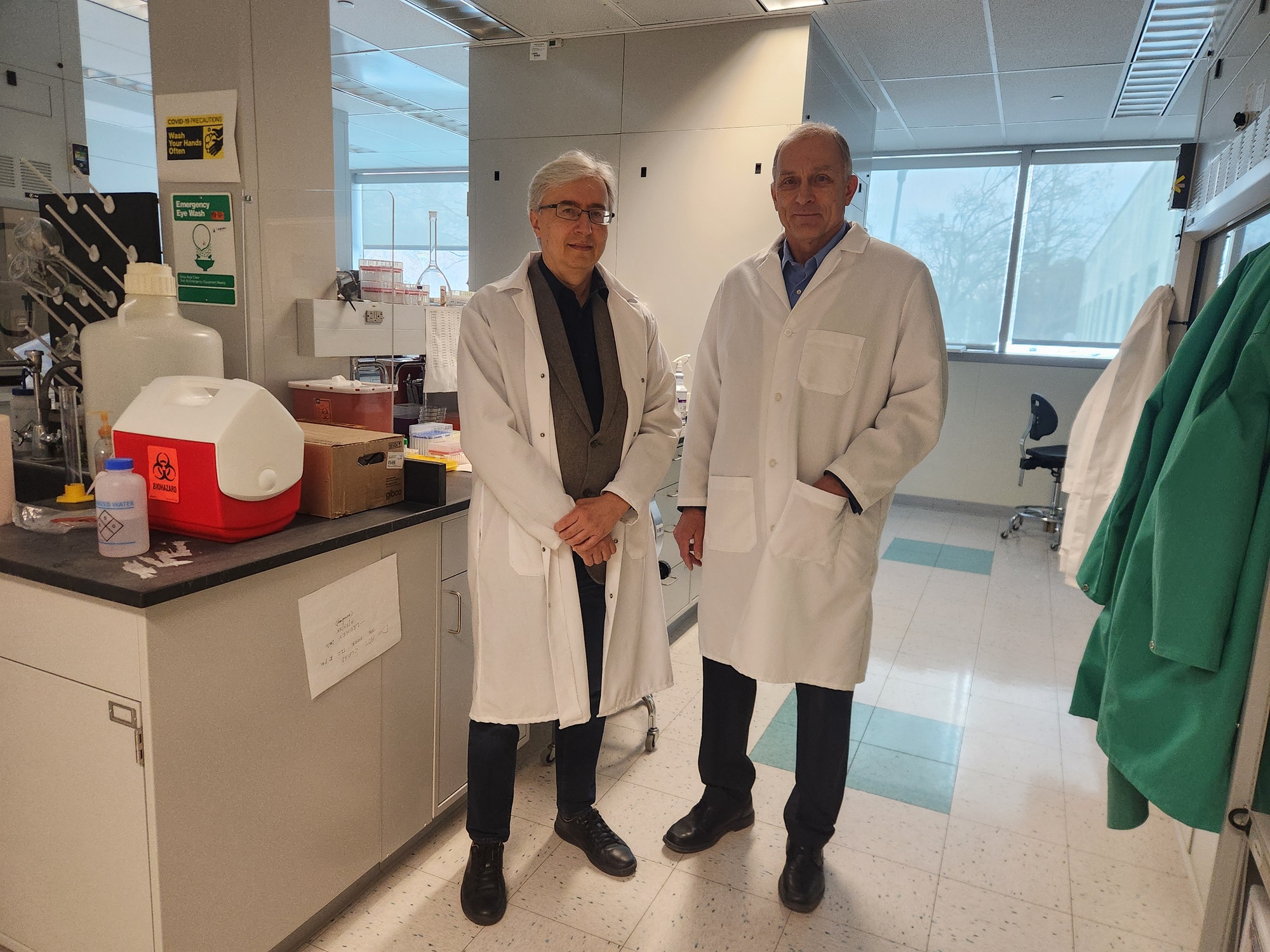
Current methods used to analyze mRNA’s packaging in lipid nanoparticles often require breaking apart vaccine samples, which is both destructive and time-consuming. Lednev and his research team’s technique is instantaneous, with the sample preserved for future testing.
“Intact lipid nanoparticles are not very stable and are difficult to characterize by existing techniques,” said Alexander Shekhtman, a professor in UAlbany’s Department of Chemistry, researcher at the RNA Institute, and collaborator on the project. “Raman spectroscopy allows us to analyze mRNA inside lipid nanoparticles without damaging it. This means we can optimize formulations to improve both safety and effectiveness.”
While conventional Raman spectroscopy captures the overall chemical composition of a sample, the amount of mRNA is small compared to the surrounding lipid nanoparticles, making it difficult to detect.
To overcome this challenge, the researchers are using a specialized deep ultraviolet (deep-UV) Raman instrument developed in the Lednev lab. The deep-UV laser can measure the mRNA molecules, while minimizing interference from the lipid nanoparticles.
“We are using our homebuilt instrument to directly analyze mRNA molecules in vaccine samples,” Lednev said. “Combining this with an advanced statistical analysis, we have created a quantitative method for ensuring the mRNA is properly protected in lipid nanoparticles.”
Supporting Medicine Development
Lednev has pioneered the use of Raman spectroscopy, coupled with advanced machine learning methods, for forensic applications and medical diagnostics over the last two decades.
His accomplishments include the development of new and innovative approaches for the identification and characterization of biological stains, gunshot residue, hair and other trace evidence recovered at a crime scene, and a noninvasive, early diagnostics of neurodegenerative diseases such as Alzheimer’s.
He believes his technique could eventually be used in quality control settings to evaluate mRNA therapeutics before release, as well as during the research and development stage.
“This is an example of how advances in laser spectroscopy can directly support modern medicine,” Lednev said. “By better understanding how these therapeutics are formulated, we can help make them safer and more effective.”
This research is supported by Sila Jin and Young Mee Jung of Kangwon National University in South Korea. Jin received a two-year training grant from the National Research Foundation of Korea to conduct collaborative research at UAlbany.
The project stems from a new partnership between UAlbany’s Center for Biophotonic Technology and Artificial Intelligence and Kangwon National University’s Institute for Molecular Science and Fusion Technology, directed by Jung.